

Muffler Types, Designs & Materials Explained – Complete Australian Guide
Muffler Designs and Materials Explained – Choosing the Right Muffler for Your Exhaust System
Not all mufflers are created equal. Whether you're building a custom exhaust system, replacing a factory muffler or upgrading for better sound and performance, understanding muffler designs and materials helps you choose the right product.
Internal construction, body dimensions, pipe routing and material all influence exhaust sound, flow, fitment and service life. This guide covers straight-through, chambered, baffled, turbo-style and XForce Varex mufflers, resonators, and mild steel, aluminised steel, 409, 430 and 304 stainless steel.
1. Straight-Through Mufflers (Megaflow) – Performance and Flow
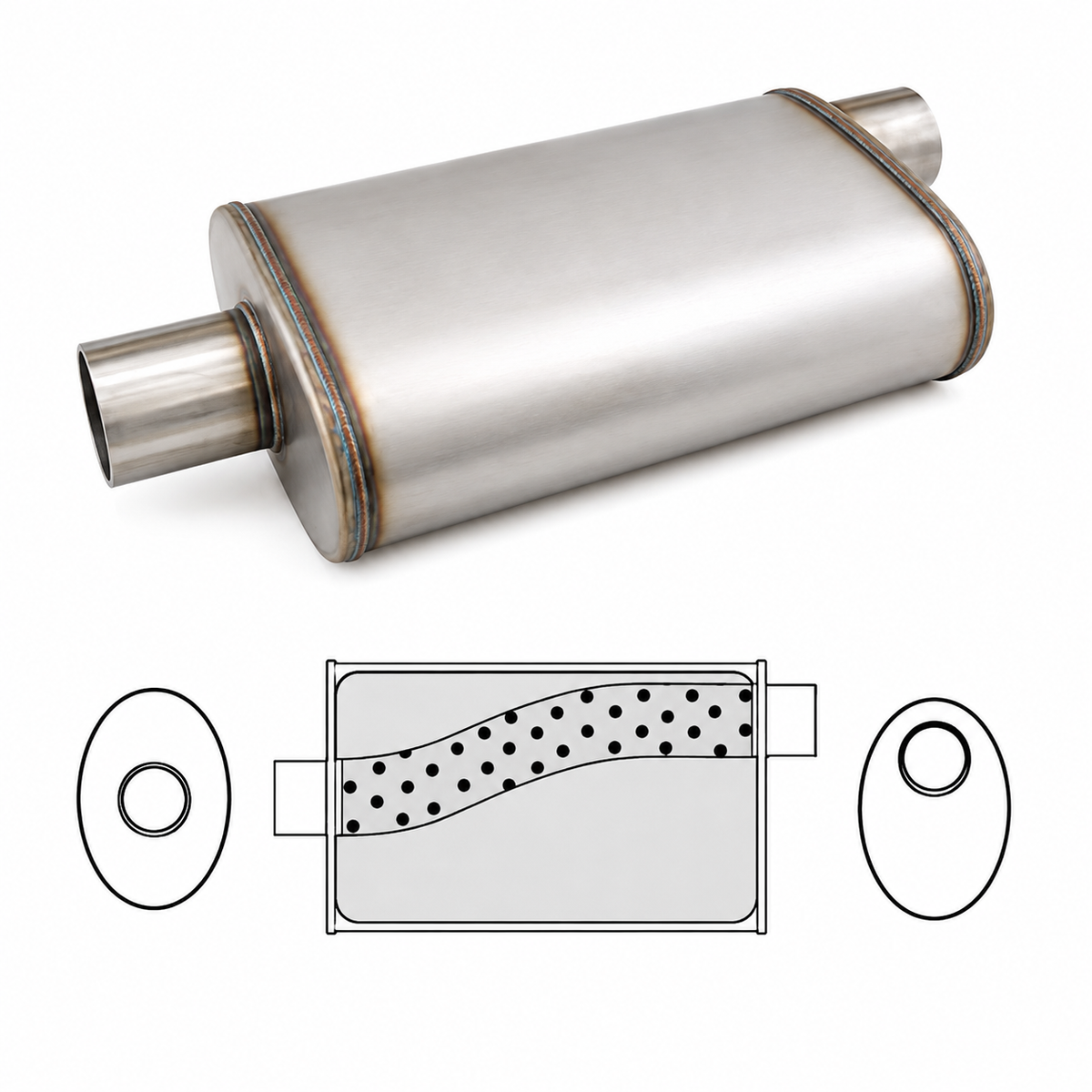
Also called absorption mufflers, straight-through designs typically use a perforated centre tube surrounded by high-temperature sound-absorbing packing. Exhaust gases follow a relatively direct path while acoustic energy passes through the perforations into the packing.
Advantages
- Relatively low restriction to exhaust flow
- Popular for performance and turbocharged applications
- Available in round, oval and compact formats
- Well suited to custom fabrication
Considerations: Sound level and tone depend on the core diameter, body size, packing and overall exhaust system. A straight-through design is not automatically quiet or road legal.
Best suited for: Performance exhausts, sports cars and custom systems.
2. Chambered Mufflers – Distinctive Exhaust Tone

Chambered mufflers use internal chambers, baffles and sound-wave reflections to reduce selected frequencies. Their layout can create a distinctive exhaust note without relying solely on acoustic packing.
Advantages
- Can deliver a strong, distinctive tone
- Popular in V8 and muscle-car applications
- Different chamber layouts allow sound tuning
- Some designs do not require fibreglass packing
Considerations: Some chambered designs create more flow resistance than a comparable straight-through muffler and can cause drone at certain cruising speeds.
Best suited for: Muscle cars, V8s and street-performance systems.
3. Baffled Mufflers – Effective Exhaust Noise Reduction
Baffled mufflers use internal metal plates, partitions or baffles to interrupt and redirect exhaust gases and sound waves. They are commonly used where effective noise control, compact packaging and a restrained exhaust note are priorities.
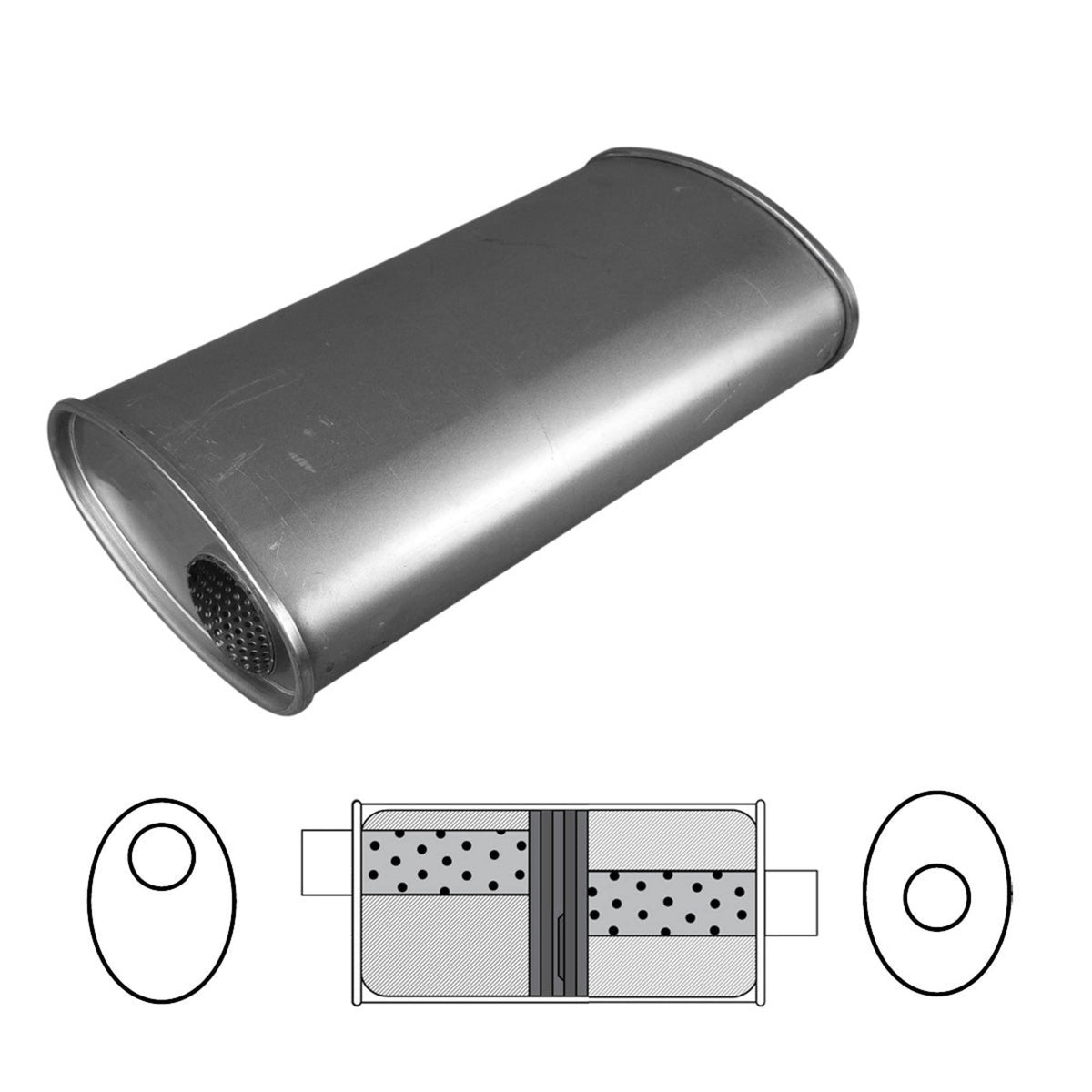
How Do Baffled Mufflers Work?
As exhaust gases pass through the muffler, internal baffles redirect the flow and reflect sound waves. Depending on the design, perforated tubes and sound-absorbing material may also be used to reduce noise. Baffle layout, spacing and passage size determine how the muffler balances sound reduction and exhaust flow.
Advantages
- Effective noise reduction for many standard and replacement exhaust systems
- Can provide a controlled, quieter exhaust note
- Often uses durable internal metal components
- Available in a range of body sizes and pipe configurations
Considerations
Some baffled designs create more backpressure than comparable straight-through mufflers, especially when passages are narrow or the exhaust flow changes direction repeatedly. A well-engineered design can still offer a useful balance of flow and noise control.
Baffled vs Chambered: These terms overlap. A chambered muffler typically uses sound-wave reflection between chambers, while “baffled” describes the internal plates or partitions that redirect flow. Many mufflers use both principles.
Best suited for: Factory-style replacements, daily-driven vehicles, touring applications and custom exhausts where quieter operation is important.
4. Turbo-Style Mufflers – Everyday Comfort
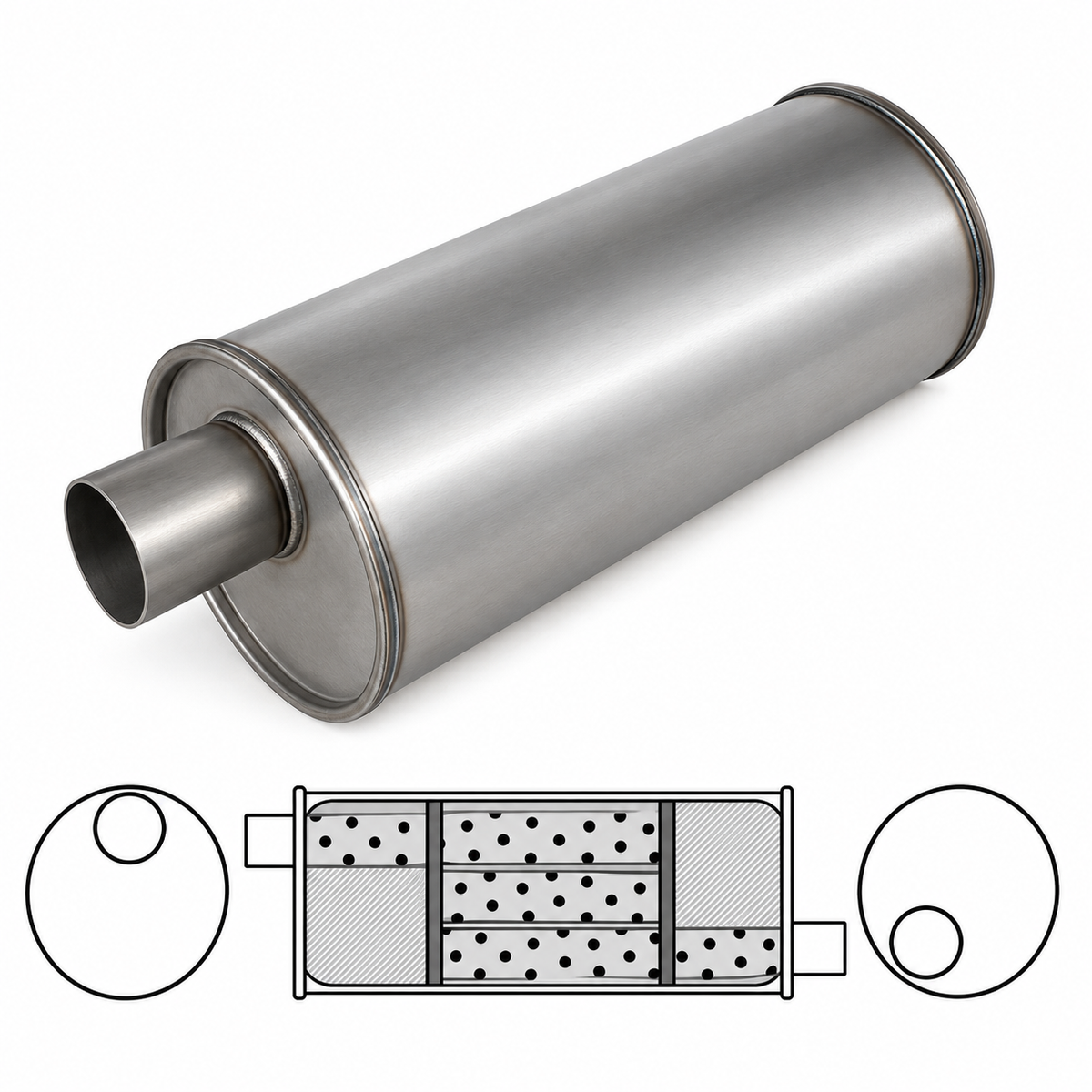
Traditional turbo-style mufflers route exhaust through multiple internal tubes or passages to balance sound reduction and flow. The name does not mean they are only suitable for turbocharged engines.
Advantages
- Often quieter than aggressive straight-through designs
- Can produce a controlled, deeper exhaust note
- Useful for daily drivers and touring vehicles
- Available in a variety of body and inlet/outlet configurations
Considerations: Multi-pass routing can introduce additional restriction, particularly for high-output applications.
Best suited for: Daily drivers, touring vehicles and mild performance upgrades.
5. XForce Varex Mufflers – Electronically Adjustable Exhaust Sound
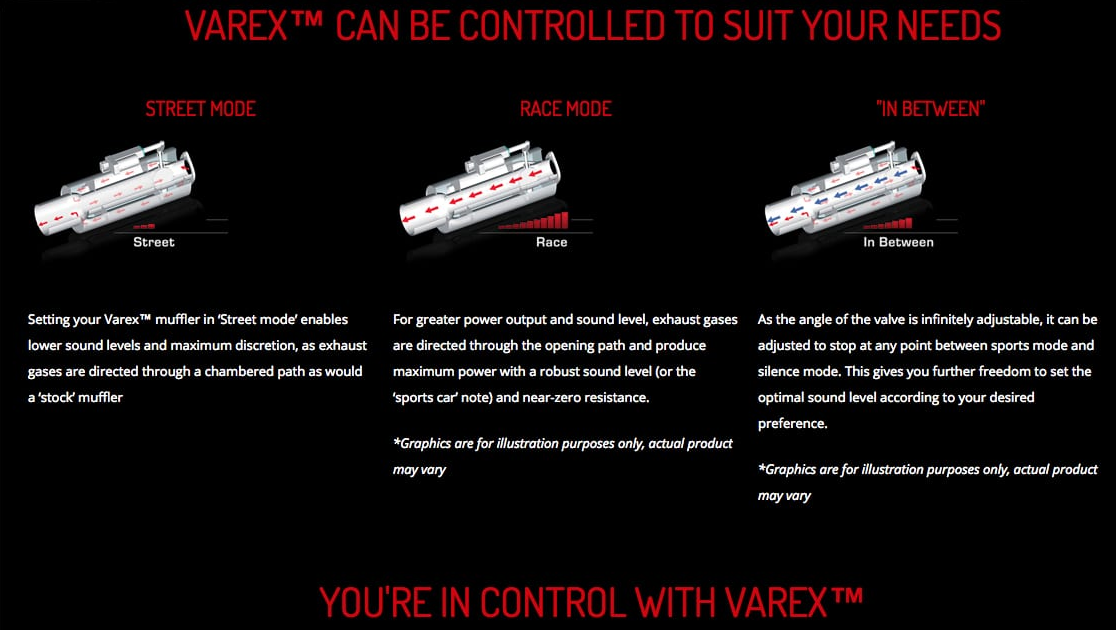
XForce Varex mufflers incorporate an electronically operated valve that changes the exhaust flow path, allowing the driver to adjust the sound without changing the muffler.
How Varex Works
- Closed valve: Directs exhaust through a quieter internal path to reduce noise.
- Open valve: Allows a more direct flow path and typically a louder, more aggressive note.
- Intermediate positions: Where supported, allow sound adjustment between the two extremes.
Advantages
- Adjustable exhaust volume and tone
- Electronic butterfly-valve operation
- Quieter setting for comfortable driving
- More direct flow path when open
- Available in different sizes and configurations for custom exhaust systems
Depending on the product and controller, operation may be by remote control or a compatible XForce SmartBox system, with additional programmable functions on supported setups. Many universal Varex mufflers use 304 stainless steel; check each product's specification.
Considerations: Installation requires electrical connections and clearance for the actuator. Valved exhaust systems must comply with applicable Australian noise and vehicle modification laws in every operating setting; a quiet mode does not automatically establish road legality.
Best suited for: Performance and custom exhausts where adjustable sound is a priority.
6. Centre and Offset Inlet/Outlet Configurations
Inlet and outlet positioning affects exhaust routing, clearance and installation rather than determining the internal muffler design.
- Centre In / Centre Out: Both connections centred.
- Offset In / Centre Out: Offset inlet and centred outlet.
- Offset In / Offset Out: Both connections offset.
- Centre In / Offset Out: Centred inlet and offset outlet.
Always check body dimensions, tube diameter, inlet/outlet position and vehicle clearance before ordering.
7. Resonators – Fine-Tuning Exhaust Sound
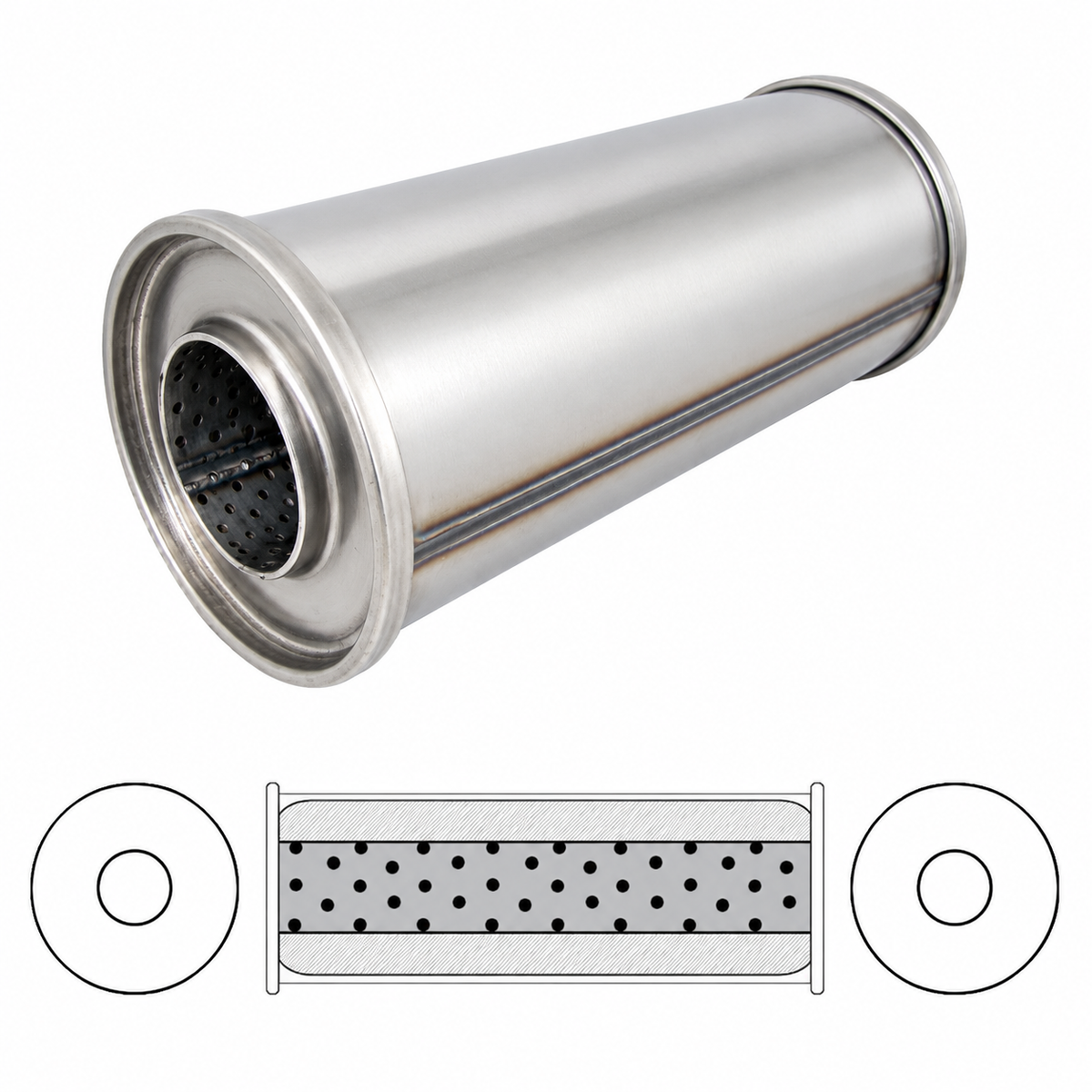
Resonators are often used alongside the main muffler to target unwanted frequencies, such as rasp or some types of cabin drone. They may use absorption, reflective or tuned acoustic designs.
- Can help refine exhaust tone
- Can reduce selected frequencies
- Useful in performance and custom systems
- Available in compact round and oval styles
Best suited for: Exhaust systems requiring additional sound tuning.
Muffler Materials – What's the Difference?
Material selection influences corrosion resistance, cost, appearance and durability. The muffler's internal design generally has more influence on sound than the grade of steel alone.
8. Mild Steel and Aluminised Steel Mufflers – Affordable Exhaust Solutions
Mild steel and aluminised steel are both widely used in exhaust manufacturing because they are affordable, readily available and suitable for fabrication. The key difference is that aluminised steel is carbon steel with a protective aluminium-silicon coating, giving it better corrosion resistance than bare mild steel.
Mild Steel
Uncoated mild steel is easy to cut, shape and weld, making it a practical option for budget exhaust repairs and general fabrication. However, it is vulnerable to rust when exposed to moisture, road contaminants and exhaust condensation.
Aluminised Steel
Aluminised steel offers many of the fabrication and cost advantages of mild steel, with added protection against oxidation and corrosion. It is commonly used in standard replacement mufflers and everyday exhaust systems. Cut edges, damaged coatings and welded areas can still be susceptible to corrosion.
Advantages
- Cost-effective compared with stainless steel
- Widely available in common muffler sizes and configurations
- Suitable for everyday replacement exhaust systems
- Easy to fabricate, with appropriate preparation and welding procedures
- Aluminised steel provides improved corrosion resistance over bare mild steel
Best suited for: Budget repairs, general fabrication and cost-effective replacement mufflers. Choose aluminised steel when additional corrosion protection is desirable without moving to stainless steel.
9. 409 Stainless Steel Mufflers
Grade 409 is a ferritic stainless steel widely used in automotive exhaust manufacturing. It provides improved heat and corrosion resistance over ordinary carbon steel at a practical cost.
Advantages
- Suitable for exhaust operating conditions
- Widely used in OEM exhaust systems
- Generally more economical than 304 stainless steel
Limitations: Surface discolouration and surface rust can occur, particularly in corrosive environments.
Best suited for: OEM-style and durable aftermarket exhaust systems.
10. 430 Stainless Steel Mufflers – Used in the Lukey Range
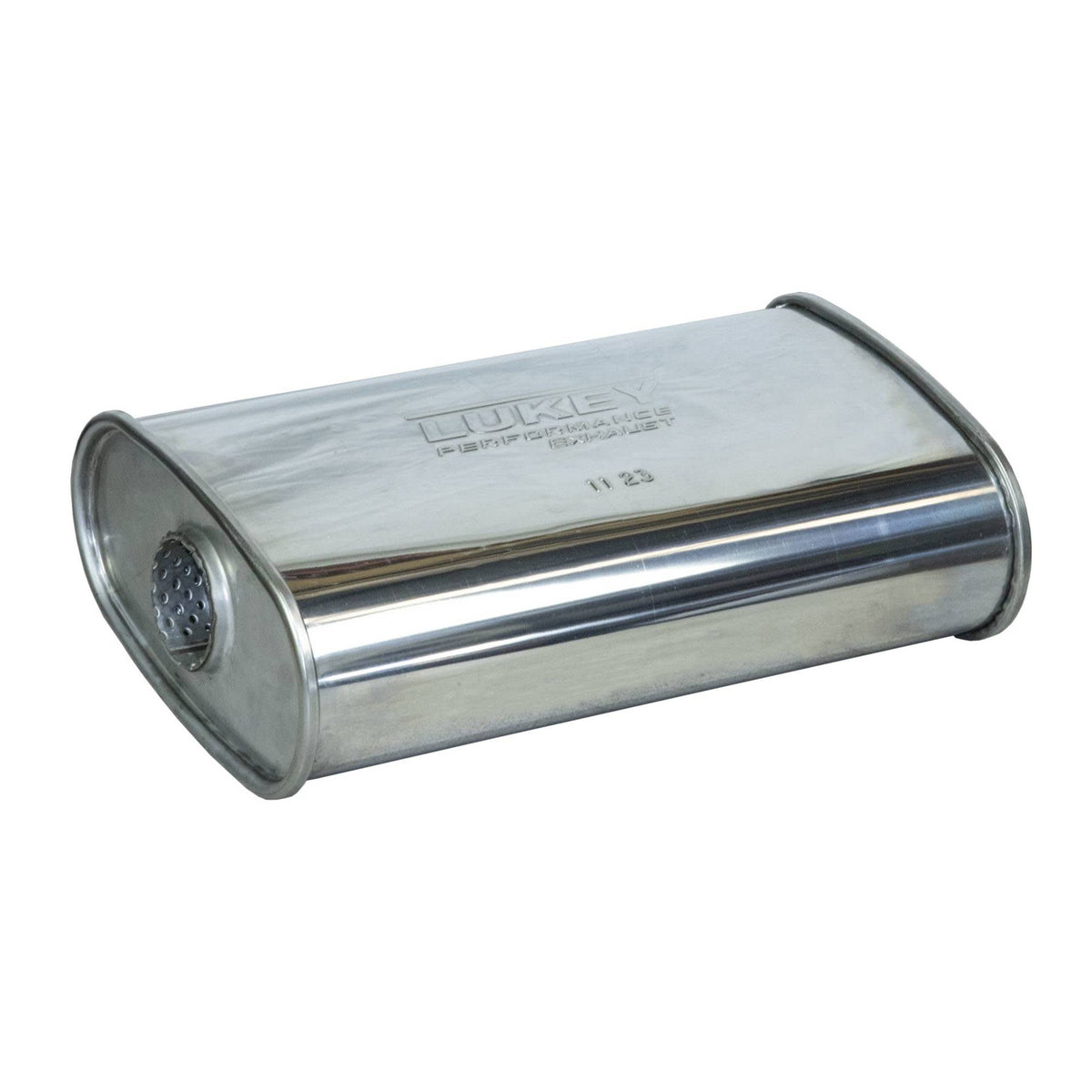
430-grade stainless steel is a ferritic stainless steel containing approximately 16–18% chromium. It offers a practical balance of corrosion resistance, heat resistance, appearance and affordability. It generally provides better corrosion resistance than 409 stainless steel in many environments, although actual results depend on fabrication and operating conditions.
The Australian-made Lukey muffler range includes 430 stainless steel designs, including Megaflow straight-through, chambered and turbo-style configurations. Construction details vary by model.
Advantages of 430 Stainless Steel
- Good corrosion resistance for many exhaust applications
- Clean stainless steel appearance
- Typically more economical than 304 stainless steel
- Suitable for professional exhaust fabrication
- Used in Australian-made Lukey performance mufflers
Lukey Muffler Construction
Selected Lukey models feature double-skin 430 stainless steel construction, perforated cores and heavy fibreglass packing. Other Lukey designs use different internal chamber or flow arrangements. Always refer to the specifications of the particular muffler.
Best suited for: Performance exhausts, Lukey muffler installations and workshop-built systems.
11. 304 Stainless Steel Mufflers – Premium Corrosion Resistance
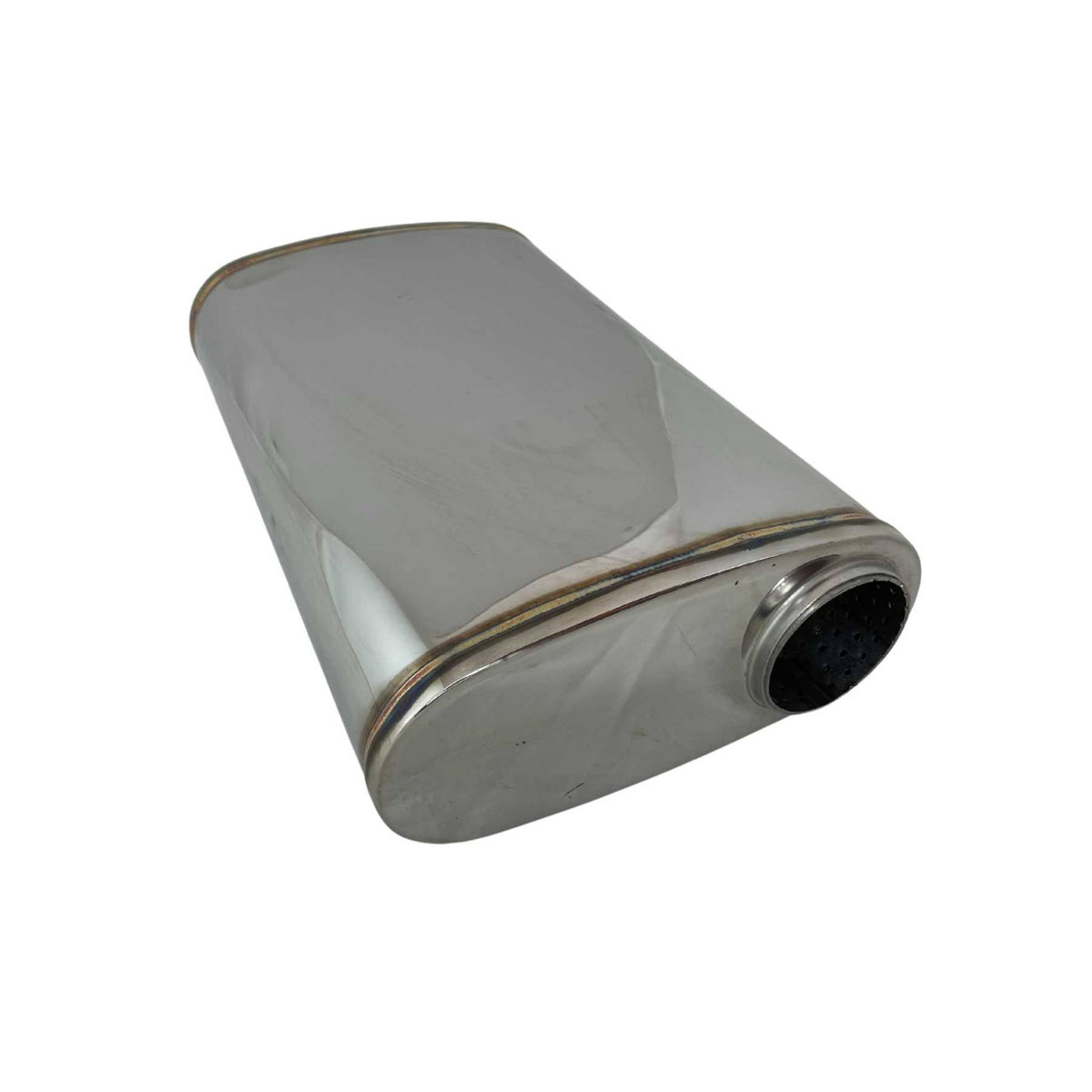
Grade 304 stainless steel contains chromium and nickel and is widely chosen for premium aftermarket exhaust systems where corrosion resistance and appearance are priorities.
Advantages
- Very good corrosion resistance in many automotive environments
- Attractive brushed and polished finishes
- Popular for premium custom fabrication
- Suitable for long-term exhaust applications
Limitations: Higher material and fabrication costs than many alternative exhaust steels.
Best suited for: Premium exhaust systems, show cars and high-quality custom fabrication.
12. Muffler Material Comparison
| Material | Typical Corrosion Resistance | Relative Cost | Typical Use |
|---|---|---|---|
| Mild steel | Low | $ | Budget repairs |
| Aluminised steel | Moderate | $$ | Standard replacement systems |
| 409 stainless | Good | $$–$$$ | OEM and aftermarket exhausts |
| 430 stainless | Good to very good | $$–$$$ | Lukey performance mufflers |
| 304 stainless | Very good | $$$$ | Premium custom systems |
Indicative comparisons only. Actual material cost, corrosion performance and service life depend on thickness, manufacture, environment and use.
13. Does Muffler Material Change the Sound?
Material can influence resonance, but internal muffler design usually has a much greater effect on exhaust sound. Key factors include chamber layout, perforated core size, packing, muffler dimensions, exhaust pipe diameter, engine characteristics and resonator placement.
A 304 stainless steel muffler is not automatically louder, deeper or better flowing than an equivalent 430 stainless steel or mild steel muffler.
14. Round vs Oval Mufflers
Round Mufflers
Round bodies are common in performance systems and resonators. They can suit compact or straight exhaust sections where space allows.
Oval Mufflers
Oval bodies can provide additional internal volume while maintaining ground clearance, making them useful in many underbody installations.
Which is better? Choose according to available space, desired sound, internal design and fitment. Shape alone does not determine performance.
15. Choosing the Right Muffler
- Sound: Quiet factory-style, deeper touring, aggressive performance or adjustable Varex tone?
- Application: Daily driving, towing, touring or performance?
- Pipe diameter: Match the exhaust system's flow requirements.
- Fitment: Check length, width, height, inlet/outlet positions and ground clearance.
- Material: Balance budget, durability and appearance.
- Build quality: Consider welds, packing and internal construction.
- Compliance: Ensure the modified system meets applicable Australian noise, emissions and roadworthiness requirements.
16. Lukey Clean Skin Mufflers – Australian Made for Custom Fabrication
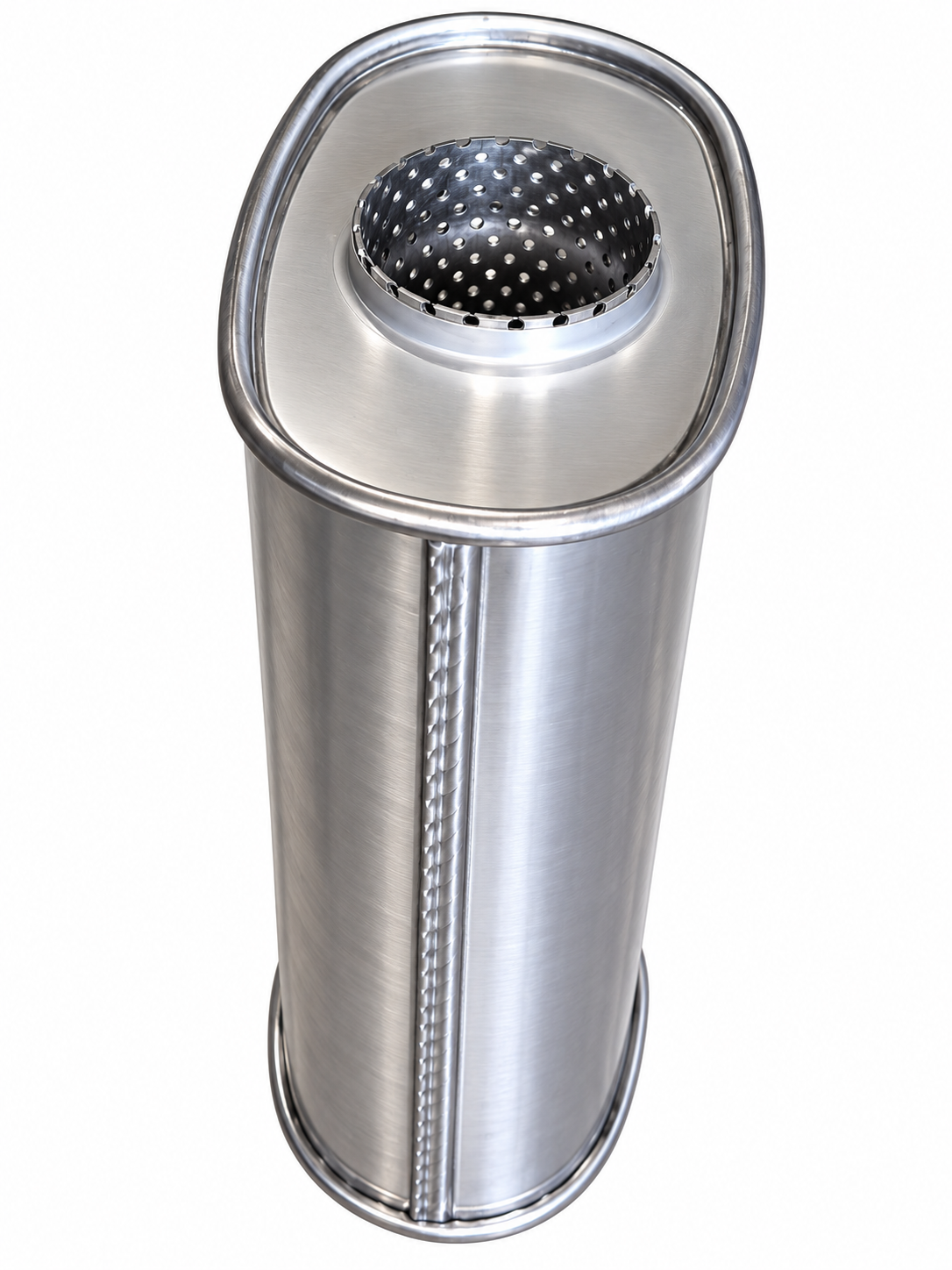
For professional exhaust workshops, the Lukey Clean Skin Muffler range offers established Lukey muffler construction without external stamped Lukey branding. This gives fabricators a clean appearance for custom and workshop-branded exhaust systems.
Why Choose Lukey Clean Skin?
- Australian made: Manufactured in Australia.
- 430 stainless steel: Durable construction used in the Lukey range.
- Unbranded exterior: No Lukey logo stamped into the muffler body.
- Clean presentation: Ideal for custom and workshop-branded systems.
- Proven designs: Based on established Lukey muffler configurations.
- Fabrication friendly: Suitable for exhaust specialists and custom workshops.
Selected Clean Skin Megaflow products feature double-skin 430 stainless steel construction, a perforated straight-through core and heavy fibreglass packing. Check individual product specifications for dimensions and configurations.
Explore the Lukey range at Equipe Auto Parts.
Final Thoughts – Which Muffler Is Best?
There is no single muffler design or material that suits every vehicle. Straight-through mufflers suit many performance applications, chambered and turbo-style designs offer alternative sound characteristics, and XForce Varex provides electronically adjustable exhaust sound.
For materials, aluminised steel offers economical replacement options, 430 stainless steel provides a strong balance of value and durability in the Lukey range, and 304 stainless steel is a premium choice for corrosion resistance and appearance.
The right muffler delivers the best combination of sound, flow, durability, fitment and value for your application.
Shop Mufflers and Exhaust Components at Equipe Auto Parts
Explore Australian-made Lukey mufflers, Lukey Clean Skin stainless steel mufflers, resonators and exhaust fabrication components for workshop repairs and custom-built systems.
Shop Universal Mufflers | Shop Lukey Mufflers
Visit www.equipeauto.com.au to explore the range.